Blog / Events / Journalists
How to make it as a fashion journalist in 2026
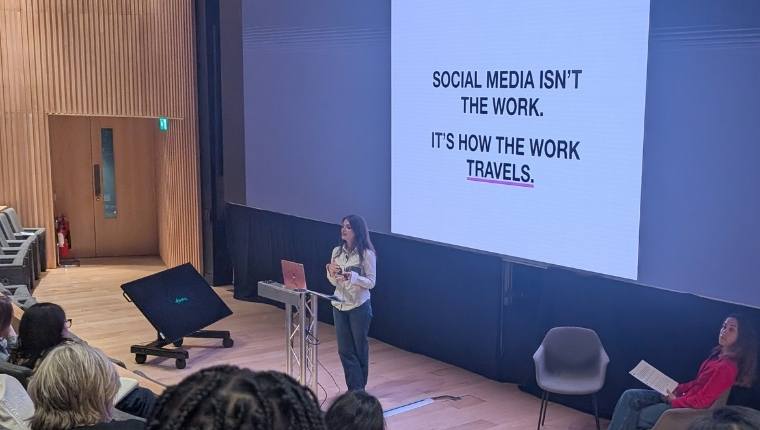

All disciplines of journalism have been affected massively by the shift to online content and the rise of social media. Fashion reporting has been significantly impacted, with influencers now able to upload fashion reviews on TikTok and Instagram to capture the attention of audiences immediately. How can fashion journalists cut through that noise and forge a career path?
In a recent talk at the London College of Fashion, Amy Francombe, contributing editor at Vogue Business, shared tips and advice on how to navigate this landscape.
Flexibility and adaptability
When Amy started out at The Face magazine in 2019, the world of fashion journalism was very different. Tiktok had yet to undergo its massive boom in popularity, and COVID had yet to have its impact on an already flagging advertising industry and live events, which were very important for many fashion magazines. The result of this was that the traditional career path no longer existed.
Amy believes that a key skill for any journalist going forward is adaptability:
‘I started to realise that I can’t tie my identity to my job title, because this idea of what a journalist is was being radically disrupted.’
Amy explained how she has tried lots of different things within the industry, and how this has helped her reporting. These different experiences can also help with building up a network, which Amy stressed is important as a lot of jobs aren’t listed nowadays:
‘I think people – because of how much the industry has changed, and how you need to be ready to move – are just looking for someone to come in and naturally grow together, find the gaps themselves, and to figure out what is this new landscape together’.
Getting your content out there and finding your niche
Building up bylines is vital for any journalist. Amy shared how bylines with smaller publications led to the digital editor of The Face reaching out to her.
‘That is another thing I want to add with the idea of prestige. People’s Substacks and Instagram blogs, if you really respect their tone of voice, all of these are so valid.’
In that same vein, if you’re struggling to land a pitch, do it yourself. Amy recommended putting it out on Substack: ‘It’s such an amazing platform, because all the editors are on there and it’s built for dialogue.
‘Really spend time just to be like, what is the work that I want to do and what is the way that feels right to me? From this, you can identify the skill set that you’re trying to monetise and then put that at the centre of the content that you’re building.’
Don’t go chasing algorithms – making the most of social media
Amy highlighted the importance of social media for journalists, but emphasised that it takes time to build a following.
The key, she shared, is to use the algorithm and not build your career around it:
‘A lot of up and coming journalists will just completely pivot to doing short form talking videos, and when this was really at its peak during the pandemic, the people that were doing this very well were full-time time forecasters who lost their job. They had this wealth of knowledge to speak from. It’s a very dangerous game to just focus on growing on social media if you don’t care about the work and just care about chasing algorithms.’
She feels that journalists should be seeing short form as audience acquisition, and then building the loyalty of that audience via long form. This is something that she has managed to do herself, having never posted a short form video or a carousel and instead opting to share 2,000 word essays.
Authentic voices, a good media diet, and finding the news angle
The use of AI in content has in turn created an increased need for authentic voices in articles. Amy stressed the importance in fashion journalism to feature people in the industry:
‘Go to somebody who can share their authentic experience. I am personally having a conversation with somebody and getting that information, and so I know the information isn’t being scraped from an AI algorithm. It’s really an exercise in figuring out how you can make the writing as human as possible and meet new people as well.’
Finally, to ensure that you are finding relevant news angles, Amy encouraged a good media diet;
‘I have a core set of publications that just through habit I will read every day, as soon as I wake up with coffee, it’s just become reflex now. I think a lot of it is constantly feeding my mind with things that could be interesting.’