Blog / Events / Journalists
Making real change: Campaign journalism that cuts through
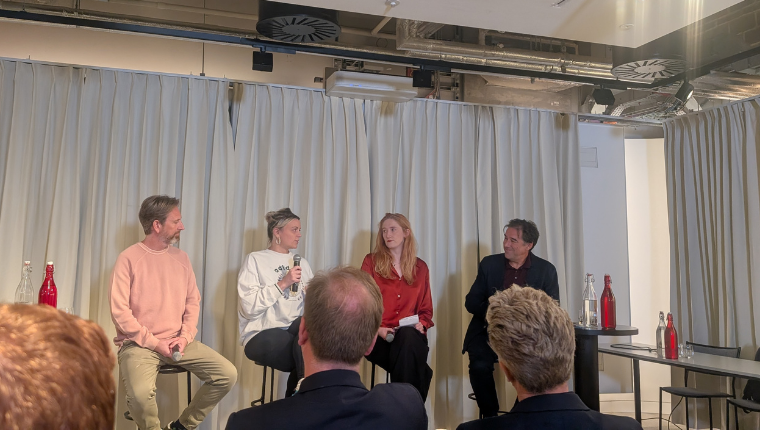

Journalism has uncovered major scandals over the decades and one of the biggest and most recent injustices was around the Post Office. Originally uncovered by Computer Weekly, this story went on to dominate national papers, with reporting aiding in bringing about awareness of the injustice faced by the impacted postmasters.
Bryan Glick, editor-in-chief of Computer Weekly, helped expose this scandal and chaired a recent panel for the BSME around campaign journalism. He was joined by Rory Boland, editor of Which? Travel, Tess Colley, investigations and deputy editor of ENDS Report, and Lucy Morgan, acting content editor at Stylist and former digital and purpose editor at Glamour.
Here are some of the topics of discussion:
Where a campaign begins
The most difficult part of any story can often be knowing where to start. Tess Colley and the ENDS Report helped to shed light on the PFAS scandal and for her it was the ‘journalistic instinct of something being off. So we dug and we dug, and then we found a lot’. Rory Boland backed this up by saying that ‘being curious is crucial’ and that for the many campaigns that Which? has run ‘what is at the heart of it is a journalist saying “Why?”’.
Listening to the audience is also vital for sniffing out a story. When Lucy Morgan worked at Glamour, a campaign was built around findings from a survey on consent:
‘You’re talking to people who have horror stories that have never been listened to before, but you’re also building a community that’s really positive and joyful of image-based abuse survivors who come to your brand because they know that they’re going to get listened to, and that’s shaped a lot of our reporting as well’.
Whether it’s from journalistic instinct or audience feedback, the campaigns and investigations are, according to Bryan Glick, often driven on ‘that degree of outrage that you found out about something that you didn’t know was happening, and your natural sense as a human being is that can’t be right’. Rory added to this by saying that ‘you then make other people outraged, and that’s how the campaign gets rolling and keeps going’.
Effective campaigns – being at the centre and digging deeper
Is a weekly or monthly publishing cycle a drawback for magazines when it comes to campaign journalism? Rory doesn’t believe so:
‘I think magazines are actually uniquely placed in driving campaigns, particularly when you’re looking for legislative change, because of the time it takes. My magazine is six times a year and that gives me the right frequency to go campaign, to give investigators time to look at it and make something really interesting. It also gives the audience a chance to breathe and we’re not just banging on about the same thing because that can be infuriating as well, particularly if you’re a reader who doesn’t care’.
Another advantage over national papers’ daily cycle that Tess mentioned was the fact that magazines are ‘much closer to the people you report on, the industry you report on, or just your subject knowledge. They go far deeper into their beats and magazines can use that position to get those stories that no one else is even looking at’.
For campaigns to remain effective, Lucy believes that publications need to ‘make themselves the base and the centre of it’ and to ‘create those conversations’. Glamour made its advocacy for women’s empowerment clear to help draw in the audience:
‘We made it an integrated experience. The whole website was about women’s advocacy and women’s empowerment, no matter what subject, and that made it feel really cohesive, and also made it feel like we met the readers where they were’.
From engaging editorial to making real change happen
Once a campaign begins to resonate with an audience and perform well editorially, the next step is bringing around real change that will benefit those affected. Both Tess and Lucy enjoyed success via partnerships. Tess explained what ENDS Report decided to do:
‘We partnered with some nationals, most often The Guardian, to give it that wider reach. It wasn’t every story we did but the really big ones that actually worked. Then broadcasters started to take notice, and each time the story still sits with us. We’re the people embedded in that community, so scaling it up, and then policymakers suddenly pay attention’.
Lucy and Glamour went for a different approach as to who they partnered with:
‘We partnered with End Violence Against Women and Girls and with Not Your Porn. We formed a campaign coalition, and basically then had this inside track to all the developments that were happening, as well as what was happening in the community. I guess seeing firsthand how this form of abuse was evolving, access to case studies would come through to us because they knew who they were affiliated with, and that we were going to handle their stories with care’.
Which? has been running campaigns and investigations for decades and Rory believes that it’s persistence that pays off in the end to bring about change. He feels that ‘you have to make it unbearable for MPs not to bring about that legislative change’. This could be because they are ‘sick of hearing about it from their constituents, or sick of the massive petitions you are dropping off at their doors, or sick of multiple newspaper headlines over and over again’.
Future of campaign journalism
The future for many forms of journalism is under threat by the rise in the amount of news-led content creators on platforms like TikTok and Instagram, but Tess sees that as a positive for the industry:
‘I think we’re definitely seeing this move towards journalists becoming personalities that front news and front the stories they’re telling. I think that can be really great, certainly on social media, because you can bypass all those old traditional media structures, and you can get that reach’.
Lucy agreed that this is a ‘new exciting area of journalism’ and one that ‘journalists who can nail the content creation and the investigative journalism’ will thrive in. However, she was concerned about documentaries going to ‘well-meaning personalities’ rather than ‘the journalists who’ve trained and who’ve done the awkward conversations and will ask the follow up questions’.
Tess picked up on this too saying that ‘journalistic integrity will be really important’ moving forward and that trust and reputation is becoming key in a world increasingly dominated by AI slop. Rory elaborated on this point further:
‘Some metrics suggest that people do want content they can trust and they want it from organisations that they can trust as well. AI is making that worse quite quickly. Readers want journalists to do TikToks and Instagram reels and everything else, but the trust in the brand and the trust in the people who work for that brand is important. I hope that trust is growing again, and there will be more opportunities for this type of journalism in the future’.