Blog / Events / Journalists
Making money out of independent magazines
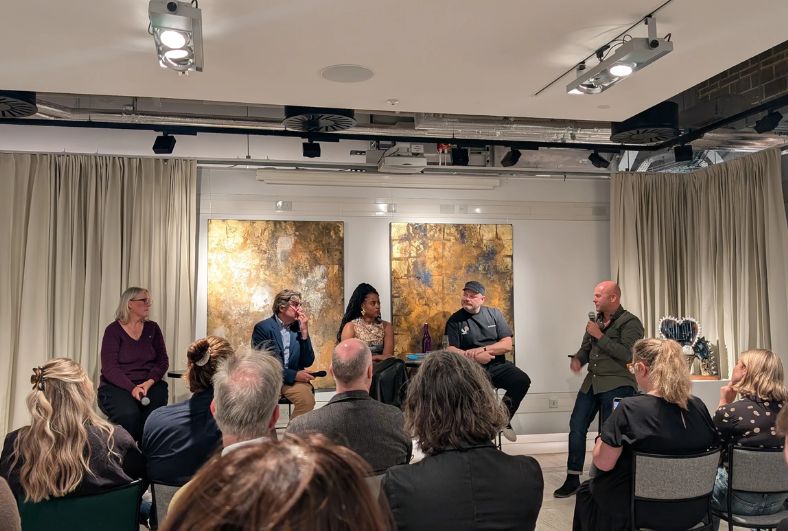

The print magazine industry has been through some difficult times with declining sales and interest, but the last couple of years have seen a revival for this medium. Independent magazines are seeing the benefit of this, but how do you make money if you decide to go it alone?
The BSME recently held an event to discuss this with Alex Mead, editor-in-chief of The Rugby Journal, chairing the panel, and he was joined by Geoff Love, publisher of Magneto and Octane, Josh Jones, editor of Huck, Sandwich and Ralph, Felicia Pennant, editor-in-chief and founder of SEASON zine, and Colette Lloyd, head of subscriptions and publisher at Warner Group Publications.
An advertiser’s dream audience
The audience is crucial to any magazine being successful, especially financially. Geoff, who has launched numerous publications during his career, stressed this when talking about the success of Magneto and Octane:
‘It’s understanding and being very focused on who your audience is, and building an audience that advertisers want to talk to. I think that’s really crucial, that it’s not just about an audience. It’s an audience that you can generate cash from because advertisers want to talk to that audience’.
This is exactly what he did when launching Magneto. Geoff built an audience based on the networks and conversations he had had with major clubs in the classic car world and major event organisers. The result was a magazine targeted at a high-end market and has therefore attracted similar advertisers.
It’s all about building an editorial ecosystem and is something that both Felicia and Alex have had to consider. Felicia spoke about how she was reluctant initially to have a digital presence but has since seen the benefit of doing so as the audience can then be captured in different ways. While Alex has had to consider how to persuade advertisers with his audience:
‘With print, you’ve got a guaranteed circulation that’s a very specific audience, but it’s quite hard to get advertisers on a general print run. You need a bigger footprint and as every single article we write is about 3000 words, if you put those online then the average page view will be about 10 minutes which is massive. That already shows your audience is a little more discerning than the ones who are just following a clickbait rugby site’.
Commercial opportunities and making money in different ways
Finding the audience to make money from with your magazine is one thing, but getting the advertisers on side is another. That’s why it’s important to have someone on the commercial side. Geoff highlighted that ‘you need someone who’s going to go out there and be able to negotiate with brands’, otherwise you’re not going to survive as a publication. Felicia also discussed the importance of this:
‘Pitching to brands and pitching to partners is very competitive. You need to be looking at what competitors are doing because obviously you’re all going after the same brands. You have to be clear on what your proposition is and how you stand out. People want to know what’s in it for them and what your added value is’.
This is all part of having a more comprehensive business plan, which Geoff said is crucial if you want to build something of substance rather than your magazine just being a passion project. He also touched upon the need to have multiple revenue streams to make money. You can’t solely rely on advertising to help finance the magazine and Josh discussed the different ways that his titles make money:
‘Huck is very traditional and is classic advertising. We’re moving to a sponsorship model though where brands will come and sponsor for the year. Sandwich; a brand pays for the whole thing and they get a back page item in the advertorial. Ralph is born from an agency that’s turning itself into an entertainment brand, so the magazine is almost like the shop window for the cool stuff that we do’.
Re-using content and the importance of design
Finding different ways to make revenue from your magazine can be tricky, but the most valuable asset you have is all of the content you produce. Colette explained how they make the most of that at Warner Group Publications:
‘We work on the premise of COPE, which stands for Create Once Publish Everywhere. You’ve got so much content and you’ve got so much of your own voice in what you’ve been putting out that there is absolutely nothing stopping you, especially in the digital world, taking historic content, putting it all together and repackaging it in either a digital or print product’.
This is something they did for Pianist magazine. They had a series of specials titled ‘Play Debussy’ and ‘Play Bach’, but these were just distributed digitally. After requests from readers to have these in print so they could have the music in front of them, they were able to print these on demand at a premium price. It was all put together using historic content and all it took them was the time and the printing cost.
The cost of printing will be more expensive if you design a magazine with better quality paper and a more striking design – but this can be hugely important to help you stand out. Felicia has used different designers each time for Season to help create ‘a different visual identity’. For her it’s been a natural process, but she said that it could be ‘built into one of the features that make your magazine stand out in your space’. Geoff’s Magneto has won several design awards, also explained why it’s such a key element now for successful independent magazines:
‘The resurgence of independent magazines over the last five years, I think, is down to the quality of the design, the curated nature of the content, and the fact that they invest in production, in print and in paper. Whereas the big boys, because they’re still trying to make the same amount of profit, just cut the paper quality’.
If you’re specifically looking at launching a fashion magazine in print, then we have more advice from another recent event here. And if you’re just starting out in the magazine industry, then you can find new contacts, experts and more by sending a request via the Journalist Enquiry Service.