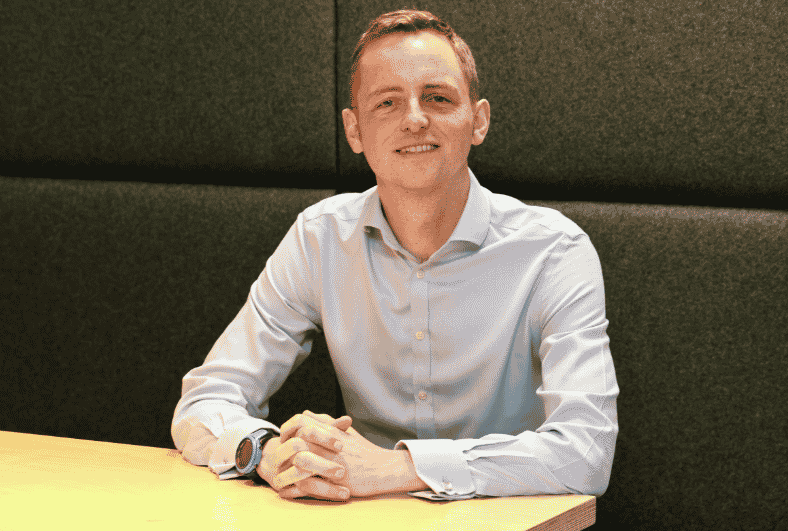
Media interview with Rob Parsons, executive editor of the local democracy reporting service at Reach plc

UK politics is in constant flux, and political journalism plays an important role in communicating how the new landscape is unfolding.
A journalist that has been covering local and regional politics for around a decade is Rob Parsons, who last year took up the role of executive editor of the local democracy reporting service at Reach plc. Rob started out at The Sentinel back in 2004 and has covered local news, crime and of course, politics. We caught up with him to discuss how he is finding the new role, what challenges local democracy reporters are facing now and how political journalism is changing to match the needs of its audience.
You’ve been in your role as executive editor of the local democracy reporting service for about nine months now, how have you found the role so far and what does a typical day look like (if there is one)?
I’ve found the role fascinating and quite different to my previous job as Northern Agenda Editor (though I’m still keeping my eye in by writing the Northern Agenda newsletter occasionally when the new editor Graeme Whitfield is away). In my old role, I was very focused on what was happening in the political scene in the North of England and I’ve now broadened my scope to the whole country, as Reach has Local Democracy Reporters from Cornwall to Essex and Northumberland as well as in Scotland, Wales, and Northern Ireland.
It’s been great to work with our LDRs and their managers across the country and see some of the brilliant political reporting they do, holding their local authorities to account and producing impactful public-interest journalism. That varies from agenda-setting exclusives to long reads about vital issues or the on-the-ground local reporting that we know readers really value.
I wouldn’t say there’s a typical day, as different challenges and tasks arise all the time. But the main focus of my job is promoting the excellent journalism being done by Local Democracy Reporters and sharing the best practice among our cohort of 83 journalists at Reach.
Our LDRs get a lot of support and guidance from the content editors and management at our Reach plc regional titles to make their journalism the best it can be, as well as developing their skills and ensuring they’re supported in the challenges they might face at work. And if one of our reporters has done a great piece of work, part of my role is to make sure other LDRs know about it so they can apply the lessons to their own journalism.
I also spend quite a lot of time meeting and speaking with key partners to the LDRS, like the BBC, as there are a lot of different organisations involved in making the scheme a continued success.
Having previously worked as Northern Agenda Editor for Reach and Political Editor at the Yorkshire Post, how would you say political reporting has changed in recent years?
I’d say a major change in the past two decades is the decline in trust in big institutions (and in politicians more widely) as well as the huge increase in tribalism, much of which has been sped up by the rise in social media. A growing proportion of voters – though certainly not all – now get their news solely from partisan sources and aren’t exposed to anything that challenges their beliefs, making it harder to establish an uncontested truth about big issues that everyone can agree on.
So much more of political journalism now happens in the online world rather than face-to-face, whether it’s through WhatsApp becoming the primary tool of communication between journalists and their sources or politicians using platforms like X to cynically weaponise news stories for their own advantage. Sadly a lot more journalists now face hostility for trying to do their job, particularly women, which is why Reach plc has recruited the industry’s first ever Online Safety Editor Rebecca Whittington to help guide and support our journalists to navigate the online world.
But despite all that, there remain lots of political journalists at local level doing what they’ve always done – diligently reporting on issues in their communities and trying their best to scrutinise the leaders who make important decisions.
After two decades working in the journalism industry, what are some of your proudest achievements to date?
In 2015, I revealed on the front page of The Yorkshire Post the links between the 1984 Battle of Orgreave – where South Yorkshire Police officers battered striking miners before arresting 95 of them on the basis of unreliable evidence – and the disaster at Hillsborough five years later.
I got my hands on a document that showed many of the same senior officers and some of the same techniques were used to discredit victims at Orgreave, and then after the country’s worst sporting disaster. The story won an award and prompted calls for a proper inquiry into the events at Orgreave – which ten years later have finally been granted.
I’m also hugely proud of the success of The Northern Agenda newsletter, which I took over in 2021 and helped to build a loyal, enthusiastic audience for coverage of the North’s political scene. I’ve been lucky enough to win a few awards for my work on The Northern Agenda, including last year being named the best individual-led newsletter at the Publisher Newsletter Awards (beating the likes of the BBC’s Laura Kuenssberg).
Many surveys and polls suggest that interest in political journalism is waning (especially among younger readers), what are Reach plc doing to combat this? And what can political journalists do more widely?
One of the big focuses for Reach plc in recent months has been switching more attention and resource to telling stories via video, as we know this is increasingly where younger consumers are getting their news rather than traditional text-based journalism. An example of this is the series of videos the Mirror put together exposing the views of Reform UK candidates in the run-up to the 2026 local elections. It shows how short-form video can make for highly impactful political journalism.
The change has been reflected in the way Local Democracy Reporters work also – I’m seeing a lot more examples now of LDRs filing video pieces to camera, explainer videos about key events or just video reportage from meetings to capture important moments like protests or elections. We’ve got extra support in place at Reach to help them do this and have been encouraging LDRs to consider video opportunities on any stories they cover.
At a wider level, something we strongly encourage our LDRs to do is to regularly get out into their communities to get the views of local voters on the issues that matter to them, rather than assume we know what readers care about or be solely led by what the local authorities we cover are up to that week. It’s just good practice for political journalists to be mindful with every story they write about what impact it will have on people and local services. And it makes for better, more relevant journalism too.
Our newsrooms are always on the look-out for ways to engage young people in our journalism. As an example, the Manchester Evening News hosted a hustings for the Makerfield by-election at the local Winstanley College to give students an insight into the democratic process, as well as sending a political reporter to interview some of the young people themselves about their views.
If you want to keep up with Rob’s work at Reach plc you can follow him on X or on LinkedIn.
If you’re a journalist who has taken on a new role within the last year or wants to speak about the changing media landscape then get in touch with our community manager, Andrew Strutt, via email – andrew.strutt@responsesource.com.