Blog / Events / Journalists
Staying in fashion: How fashion media publications are adapting with the times


Is print out of fashion? Not for fashion journalists. At an event for London Fashion Week, three founders of fashion magazines and zines reflected on the continued appeal of print, building a community around in-person events, and how the industry is changing.
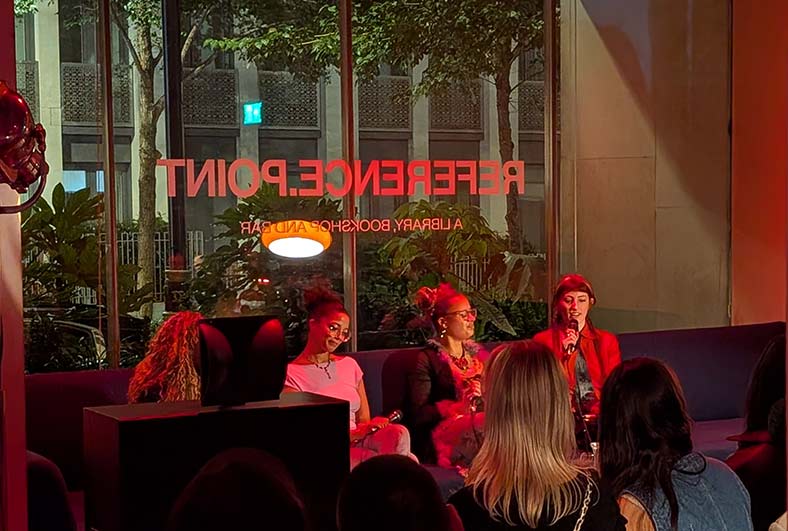
Here are key takeaways from Natalie Vest-Jones, founder & creative director of The Sanxtuary, Mia Sakai, founder & editor-in-chief of Aether magazine, and Daisy Riley, founder and editor of The Grey, shared during an event in collaboration with VAGUE Digital.
An enduring love for print
Many publishers have seen the number of print magazines declining in recent years, but for all three founders it was still an important part of their offering. Mia shared why it’s still a special experience:
‘You can’t take away the feeling of opening a magazine, the smell of it and the experience of it. That is never going to die. Plus, I feel like buying a magazine is a privilege in a way and something that has to be a treat. Everyone always wants a beautiful thing to look at and that’s what a magazine is to me’.
Natalie agreed that readers still enjoy print and doesn’t believe that the fall in magazine sales is due to a lack of interest. She feels that legacy magazine titles have become ‘stagnant’, partially because of a rise in the amount of ads. Whereas indie magazines are really working on curating the content that goes into it and are making sure that they ‘have an opinion’ and ‘are saying something purposeful’.
For Daisy, it resonates more with her from a political perspective:
‘Zines have been around since the 1920s, basically, so that anyone can put their work into print and take up space without censorship, and that was very much something that I wanted to carry through. Print media is amazing in the sense that it can’t really be censored and it can’t be hidden by an algorithm.’
The importance of in-person events
While print is still key for fashion media, in-person events can break down barriers and make sure that it’s accessible to everyone. It’s something Daisy considered from the outset when launching The Grey:
‘When I decided to make the magazine, I immediately knew I was also going to programme events alongside it because it’s so important. If I’m supposed to be making this publication about sharing stories that the fashion media isn’t sharing, then I have to make that accessible to everyone’.
Mia also feels that it’s a way for publications to move with the times and offer something to readers that can help establish a community:
‘Gen Z and our generation want more than just a physical thing or a social account to follow. We want community. We want meaning. We want more because there’s so much media to consume consistently.’
Barriers to entry in fashion journalism and the necessity of social media
All three founders agreed that the fashion industry has issues when it comes to accessibility and also representation. Mia created her magazine as ‘a platform to give celebration to people who maybe wouldn’t have the platform otherwise’. Natalie likewise exclusively features bipoc and queers creatives in her magazine to show them as the ‘innovators that they are and get the credit that’s due to them’.
Mia expanded a little more on these issues:
‘There are so many barriers to entry and so many gatekeepers. It’s very difficult to exist in that space, especially as a working class creative. Community is the soul of it but it can also take the soul away depending on what space you’re in.’
Fashion journalists are also finding that while social media is a great way to reach new audiences, it’s not as enjoyable as it used to be. Natalie said:
‘I don’t think it comes naturally anymore. Back in the day, Instagram used to be fun and you would be excited to post but now it just feels like work. Unfortunately, you’ve got to keep making content and playing the game so you can reach the right people’.
Mia agreed that it’s a necessity for creatives and artists to put content out, but said that ‘sharing art was fun before but now it’s like content creators. We used to post art to satisfy our own souls and express ourselves but it’s got completely confused’.
Daisy also felt that social media had a real mix of pros and cons, but said a big benefit was that ‘everyone has a platform to connect with people’.
If you’re a fashion journalist in need of comment for your content, check out fashion experts available to talk to the media now.