‘What is key is speaking to people about their problems’: Media interview with Jack Simpson, money reporter at The Times
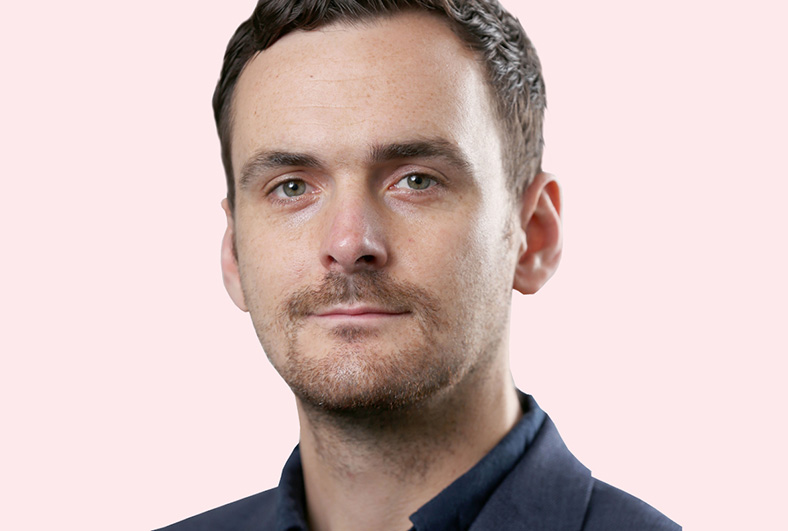

Personal finance will always be a hot topic for the media to cover, with people keen to find out ways that they can save money and how announcements such as the Budget can affect their everyday lives. Jack Simpson has been covering personal finance news at The Times for nearly a year now and we caught up with him to find out the challenges and achievements from his first twelve months, how working in national press compares to trade magazines, and what his journalistic hopes are for 2026.
You’ve been working as a money reporter for The Times for nearly a year now – what have been the biggest challenges, and what have you really enjoyed getting stuck into?
Starting in any new field or subject area is always challenging. There is a lot to get your head around with personal finance. There’s a lot of rules to do with tax and pensions that aren’t necessarily the easiest to understand, so it takes a little bit of time to get to grips with it all. I think personal finance journalism is a lot more technical than areas that I’ve covered in the past, and you often have to explain these rules and that’s definitely different from writing about transport policy and being more generalist.
But what I really like about journalism, and I think this is really key for personal finance, is speaking to normal people and finding out their problems. In personal finance journalism, you often get to highlight their issue and give them a voice, and I think with personal finances it can be really tangible. It can often result in changes by companies or changes to policies and has a real impact for these people. I recently reported about the infected blood scandal and the compensation scheme for that, and how families of dead victims of the scandal were being hit by inheritance tax. In the budget, Rachel Reeves said that they were going to change those rules. I suppose my report, alongside some others from other papers, helped change that.
Previously you spent about eight years working for trade titles such as Construction News and Inside Housing – what was the transition like going from a trade title to national news? What are the major differences people might not expect?
The trade titles give you a good grounding and give you really good skills in a slightly less pressurised environment. I’m a massive advocate for anyone who’s starting out their career, if they get an opportunity to join a trade title, I’d recommend it. Particularly with local news diminishing a little bit, trade titles are a good place to start and you probably get paid a little bit better than local news, too. It also gives you good skills, particularly if you want to move into business journalism.
The basic skills still apply as you move over to nationals. But I would definitely say that at a national title the pressure is on a lot more in terms of time and getting new lines and stories. It is a slower pace at a trade title. However, if you’re at a national title, doors open a lot more for you, and you’re given more stories as well. At trade titles, you have to work quite hard for stories or to get people to speak to you. This is a really good challenge in finding stories and getting them over the line. I found it easier to get in a door with people and speak to higher profile people once working on national press. But there’s a lot of demand when you’re at a national newspaper, and a lot more competition as well with other nationals as well.
Overall you’ve been working in journalism for about ten years now, what would you say some of your favourite stories, or most impactful articles?
At construction news, I was there when Carillion collapsed, which was a massive news story, both nationally and obviously for the construction sector. It was good grounding for getting exclusives and something that the nationals would pick up. Then at Inside Housing, we did loads post Grenfell and on the building safety crisis, which we and I won a few awards for. We covered every day of the Grenfell tower Inquiry, which for a news team of four people was pretty impressive.
Last year at The Guardian, I did a lot of exclusives on the Brexit trade problems at the border and I think that really held the government’s feet to the fire on that. There was also an investigation looking into the saga of leaseholders living in a nightmare block, which was really fun and took a few months to get over the line.
Recently, at The Times, I’ve done an investigation on a property investment company where there’s lots of people out of pocket, in some cases by hundreds of thousands of pounds. The company is now led by the former deputy leader of the Workers Party of Great Britain.
One of my favorite stories that I’ve done this year was actually going back to my old school and giving a talk on child trust funds, which was this programme where Gordon Brown gave money to every child in the UK, and it got invested. From my talk, I think about five or six students discovered this pot of money, usually over a grand, that they didn’t know about. So we found five grand in total from going in there, and we wrote about it.
How has the adoption of AI across the media industry had an impact on your work so far? Do you see AI integration as positive or negative for the media?
It’s definitely useful when you are doing the research, in terms of pointing you in the right direction. But you have to be very wary of taking anything provided by AI as rote. I’ve come across lots of instances where they provided me with incorrect information, but it is a helpful tool.
Overall, do I think it’s positive or negative? I think it will put pressure on the media. You already see some media organisations looking to rely on it for copy and I don’t necessarily think that is the best outcome. What I always take solace in is that AI could never pick up the phone to a source or an expert and get an original quote or tip off for a story. Also, I do think there is an appetite for original reporting. I think if you dilute the media space with too much AI copy, people will get bored and they will automatically turn to what they can trust and what they find interesting. I do think it could have a negative impact, and it could have an impact on jobs but there should always be a place for original reporting, and I think that is what the public want.
With the increased focus on multimedia formats, does every journalist need to be au fait with multiple platforms now?
You are already seeing the success of journalists who are not only able to use social media, but actually share their work through TikTok and Instagram. That is how a lot of younger generations consume their news now. I think it’s important that journalists use all of these formats, not only so they can get their news articles and features out there, but also to boost their profile.
Journalistic hopes for 2026 or any stories that you are particularly looking to cover?
I’ve got quite a few different ideas and irons in the fire. Times Money relaunched and we’ve now got a bigger team, meaning we’re able to do some of that really ambitious stuff. I think we have been doing that anyway, but I’m really excited to be part of that journey as we grow, and be able to be part of the team that provides that personal finance coverage.